Honda Rebel 300 Review
Review
By Serena McKnight
Share
The Honda Rebel has a beginner-friendly pedigree like no other motorcycle cruiser.
Schedule a test ride on the Honda Rebel 300
Since its launch in 1985, this small-bore hero has been introducing riders to motorcycling with its likable, easy-to-handle character. While the 2021 model remains unchanged after its 2020 updates, it retains the approachable nature for which it is very well known: a plucky engine with performance that won’t be outgrown too quickly, a low seat height that new and shorter-statured riders will feel comfortable swinging a leg over, and a low-slung chassis that’s easy to handle on the road and while stopped.
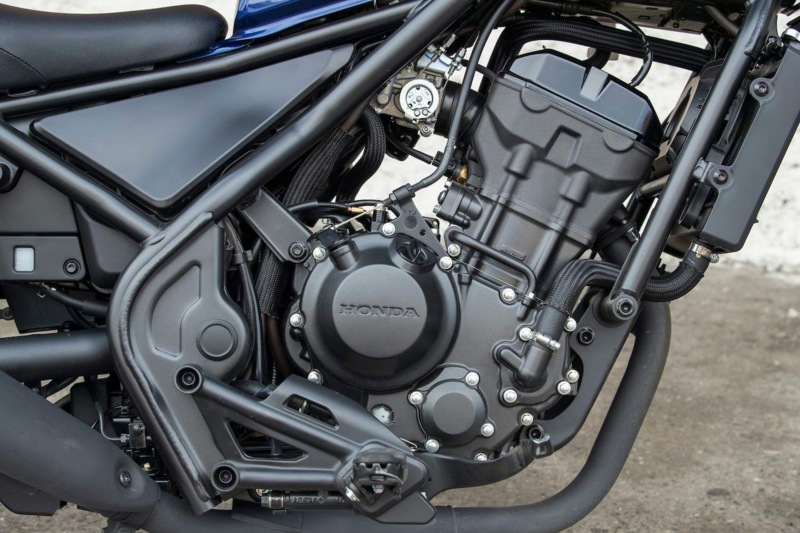
The throttle is easily modulated; the Rebel’s delivery of power is predictable and smooth thanks to well-sorted fuel mapping. The clutch lever pulls with minimal effort thanks to the cable-actuated slip and assist clutch. Shifting gears through the six-speed gearbox is precise; the Rebel does not give off a deep “thunk†confirming the gear-changing action like that made by some larger V-twins. It’s doing its job without fanfare or fuss.

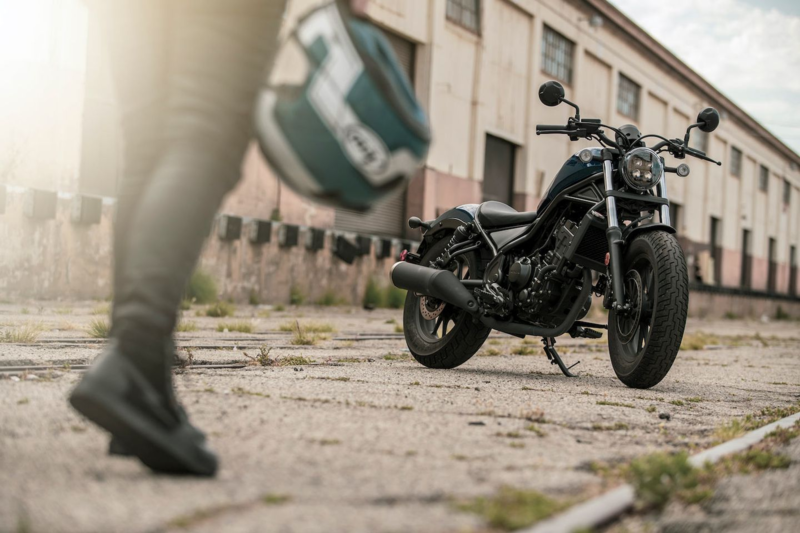
The Rebel carries over styling cues first seen in the 2017 redesign. Its 3.0-gallon peanut tank has bobberlike lines leading down to a 27.3-inch low solo seat. Blacked-out paint covers nearly every inch of components south of our test unit’s Pearl Blue tank and fender. The LED lighting package, which saw a redesign in 2020, is in typical high-quality Honda fashion and gives this bike a modern cruiser appearance.
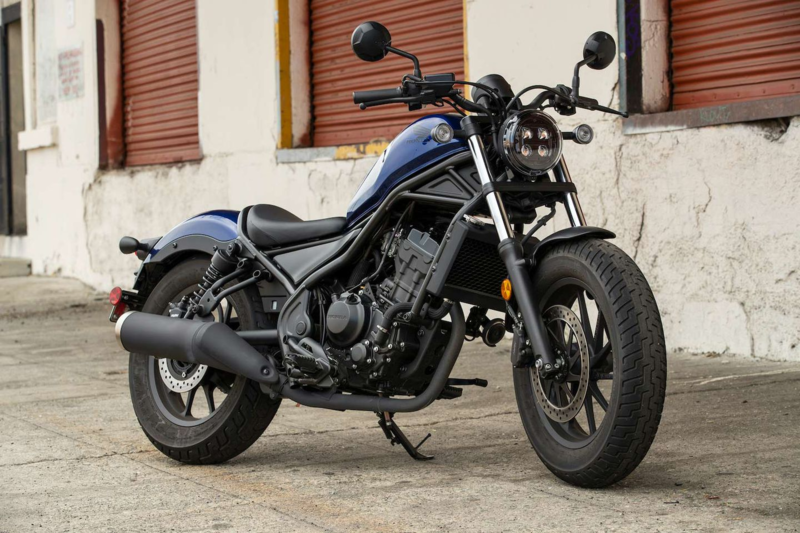
While the seat height and peg location cramps my 32-inch inseam slightly, the seat-to-bar stretch is more roomy. A shorter 5-foot-6 tester with a 31-inch inseam agreed that the seat was very low and the pegs high, though the reach to the bars was not an issue for him either. Seat cushioning, however, is firm and dense, contributing to a numb butt after about an hour and a half of riding.
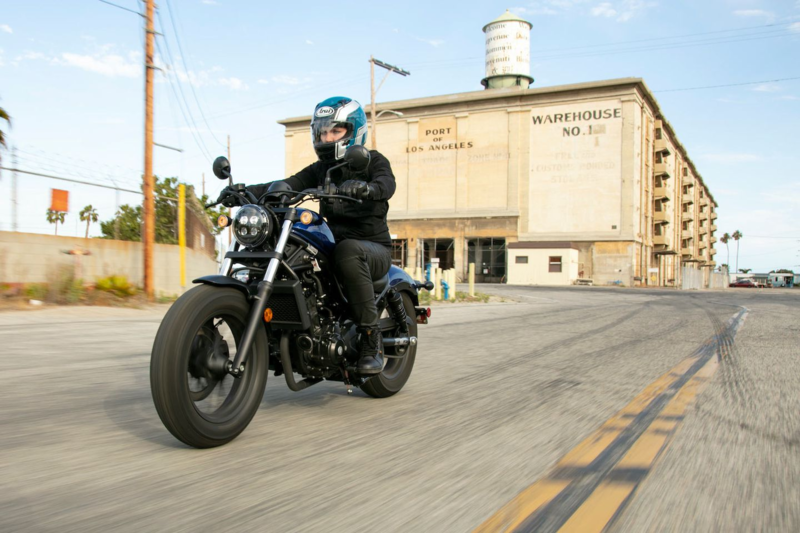
The suspension is also on the firm side, with a sporty feel from both the 41mm telescopic fork and dual shocks allowing the rider to explore their limits on snaking roads. Small-bump compliance is good for soaking up minor imperfections in the road; it’s only when hitting large bumps that the rear finds the bottom of the Rebel’s 3.8 inches of travel. The bike carries its light 372 pounds hunkered down low, making it very maneuverable and quite fun on winding backroads.
Applying the Nissin brakes (296mm and 240mm discs, front/rear) demonstrates well-controlled fore and aft weight transfer, again thanks in part to the Rebel’s sub-400 pound mass. This also helped us record a 141.3-foot stopping distance from 60 mph to zero. Furthermore, both the front and rear brakes have a wonderful feel that lets you know when you are approaching imminent assistance from the ABS system.
Motorcycle models come and go, but the Rebel’s 36-year run goes to show that approachability is always in demand. Riders who are just beginning to grow and develop their skills will find this bike a great place to start their motorcycle journey.